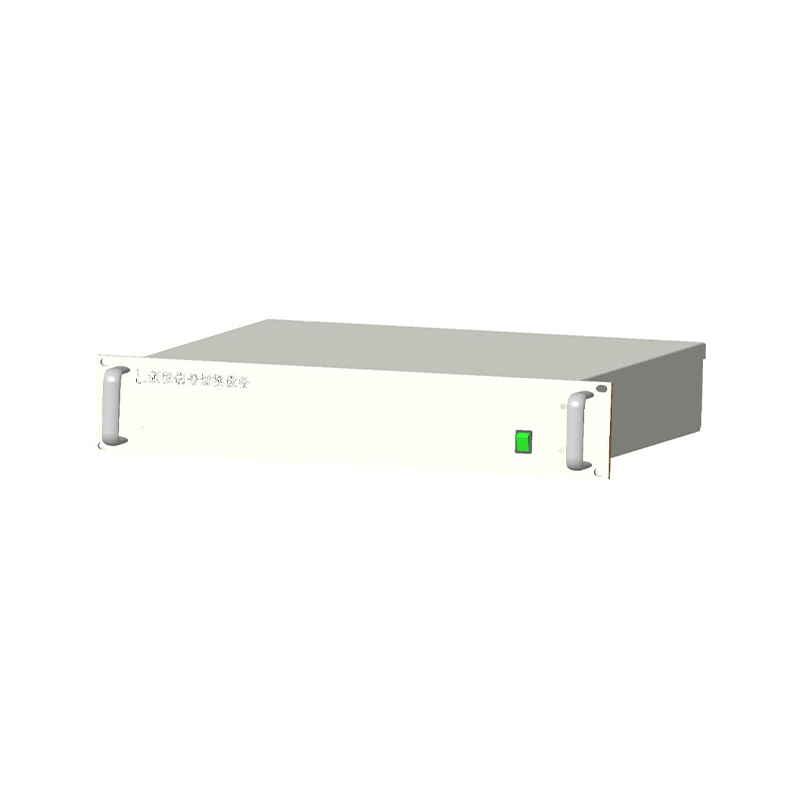
How do remote and local dual-mode operation of L-band signal switching devices improve system management flexibility?
Publish Time: 2026-04-30
In modern communication and radar systems, L-band signal switching devices, as critical signal scheduling units, undertake the important tasks of multi-channel signal distribution, switching, and management. With the continuous expansion of system scale and the increasing complexity of application scenarios, a single operation mode is no longer sufficient to meet the needs of flexible management.1. Remote Operation Enhances Centralized Management CapabilitiesRemote operation mode allows administrators to manage signal switching devices uniformly through a network or control platform. In large communication systems, equipment is often distributed across different sites or even different geographical areas. Remote control enables unified scheduling across regions, completing signal switching, parameter adjustment, and status monitoring without on-site operation. This centralized management method significantly reduces labor costs while improving response speed.2. Local Operation Ensures On-Site Emergency Response CapabilitiesAlthough remote control has high efficiency advantages, local operation remains crucial in the event of network interruptions or system anomalies. Local mode allows operators to directly control and switch at the device end, ensuring that the system maintains basic operational capabilities even in extreme situations. This design provides a "fallback mechanism" for the equipment, enhancing the overall system reliability and security.3. Dual-Mode Switching Enhances Operational FlexibilityThe remote and local modes are not independent but can be flexibly switched according to actual needs. When the system is operating normally, remote centralized management is prioritized; when network latency or anomalies occur, it can quickly switch to local control mode. This dynamic switching capability allows the device to adapt to various complex operating environments, avoiding the limitations of a single control method.4. Improved Multi-Scenario AdaptabilityL-band signal switching devices are commonly used in various scenarios such as communication base stations, radar systems, and test platforms. Remote mode is suitable for unattended or centralized management environments, while local mode is more suitable for debugging, maintenance, and on-site emergency operations. The dual-mode design allows the device to switch freely between different application scenarios, thereby improving the overall system's applicability.5. Optimized Operational Efficiency and Fault Handling SpeedThrough remote operation, maintenance personnel can monitor the equipment's operating status in real time, promptly detect anomalies, and make adjustments, reducing the frequency of on-site inspections. When on-site troubleshooting is required, local operation can quickly complete signal switching and testing, significantly shortening fault location time. This combination of "remote monitoring + local processing" significantly improves operational efficiency.6. Enhanced System Security and ControllabilityDual-mode operation improves both flexibility and system security. When remote operation poses risks, the local mode serves as an independent control channel, preventing system loss of control due to network attacks or communication anomalies. Simultaneously, a hierarchical access control mechanism further ensures operational controllability and security.In summary, the L-band signal switching device, through remote and local dual-mode operation, achieves an organic combination of centralized management and on-site control. This design not only enhances the system's flexibility and adaptability but also strengthens its operational stability and security, enabling it to better meet the diverse needs of modern complex communication systems.