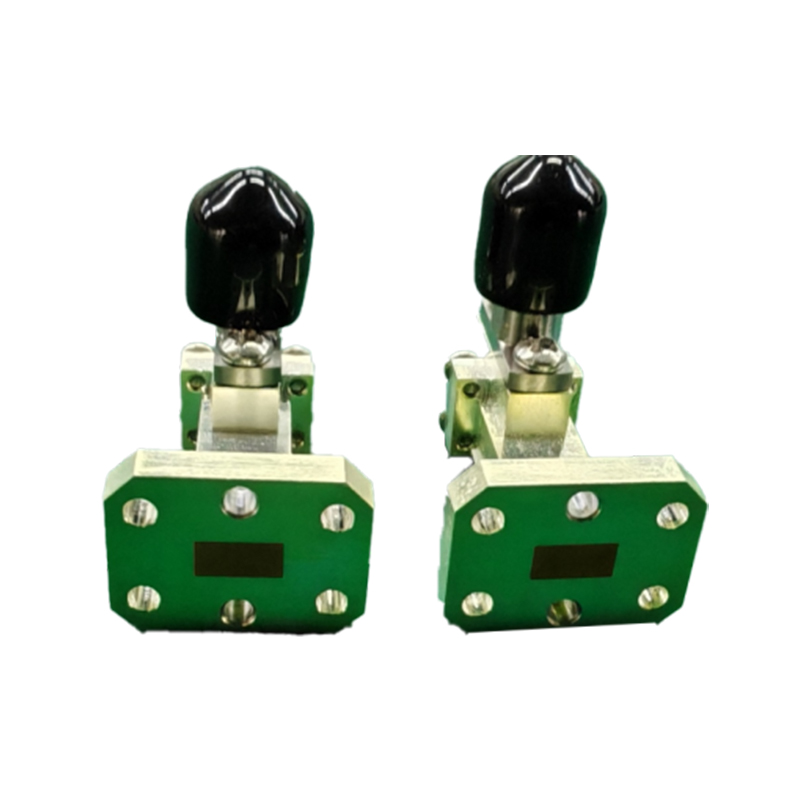
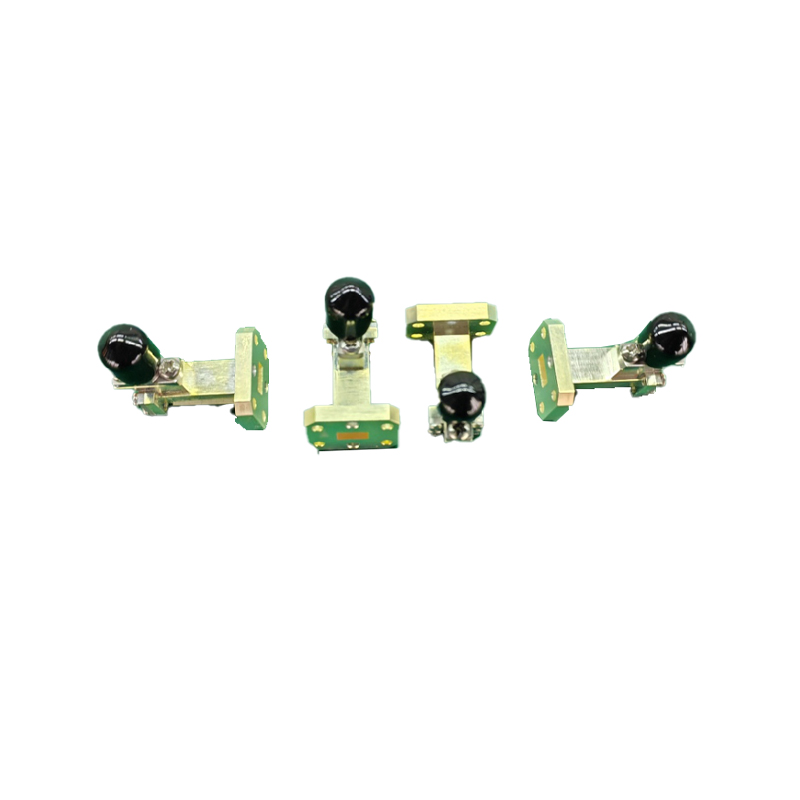
How can waveguide coaxial converters balance miniaturization and high-performance electromagnetic characteristics in complex system integration?
Publish Time: 2026-04-17
In modern microwave and millimeter-wave systems, waveguide coaxial converters, as key devices connecting different transmission structures, are widely used in radar, communication, and test systems. As devices evolve towards higher integration and miniaturization, achieving excellent electromagnetic performance within limited space has become a core design challenge. Miniaturization often means structural compression and size reduction, but this can also introduce problems such as impedance mismatch and increased losses. Therefore, a delicate balance needs to be achieved between structural, electromagnetic design, and manufacturing processes.1. Compact Structure and Electromagnetic Matching DesignIn miniaturization design, the transition structure between the waveguide and coaxial cable must first be optimized. By employing gradient structures, probe coupling, or stepped impedance matching techniques, a smooth electromagnetic transition can be achieved within a limited space, reducing reflections and standing waves. Simultaneously, using 3D electromagnetic simulation tools for precise analysis of the field distribution helps maintain good impedance matching while compressing dimensions, thereby achieving low voltage standing wave ratios and stable transmission characteristics.2. High-Frequency Performance and Loss ControlIn high-frequency and even millimeter-wave bands, size reduction significantly increases conductor and dielectric losses. Therefore, high-conductivity materials, such as silver-plated or gold-plated copper, should be prioritized in the design to reduce losses caused by surface resistance. Simultaneously, unnecessary interface and structural abrupt changes should be minimized to avoid energy concentration in localized areas, thereby reducing insertion loss and improving overall transmission efficiency.3. Multimode Suppression and Structural OptimizationAs structural dimensions shrink, higher-order modes are more easily excited, affecting signal purity and stability. To address this, optimizing waveguide cross-section shape, adding absorption structures, or introducing mode filtering designs can effectively suppress unwanted mode propagation. Furthermore, properly controlling the geometry of transition regions to ensure dominant mode transmission is crucial for maintaining high-performance electromagnetic characteristics.4. Precision Manufacturing and Assembly ControlMiniaturized structures place higher demands on manufacturing precision. Even minute dimensional deviations can be amplified at high frequencies, leading to performance degradation. Therefore, high-precision CNC machining or precision EDM processes are required to ensure that critical dimensions and surface quality meet design requirements. Meanwhile, strict control over coaxiality and contact reliability is crucial during assembly to avoid additional reflections or losses due to assembly errors.5. Thermal Management and Reliability DesignUnder high power or long-term operation, waveguide coaxial converters still generate heat. Miniaturized structures have limited heat dissipation capacity; therefore, it is necessary to improve heat dissipation efficiency through reasonable heat path layout or the selection of high thermal conductivity materials. Furthermore, the structural design should balance mechanical strength and environmental adaptability to ensure stable performance under complex conditions such as vibration and temperature changes.6. System-Level Co-optimizationIn complex system integration, waveguide coaxial converters are not isolated entities but rather part of the entire RF link. Co-design with upstream and downstream components can reduce performance losses caused by interface mismatches. Simultaneously, reasonable layout and routing help reduce system-level interference and achieve optimal overall performance.In summary, the miniaturization design of waveguide coaxial converters in complex systems requires multi-dimensional optimization across structural compactness, electromagnetic performance, and manufacturing processes. Only through meticulous design and system-level collaboration can we maintain excellent performance such as low VSWR, low loss, and high stability while reducing size.