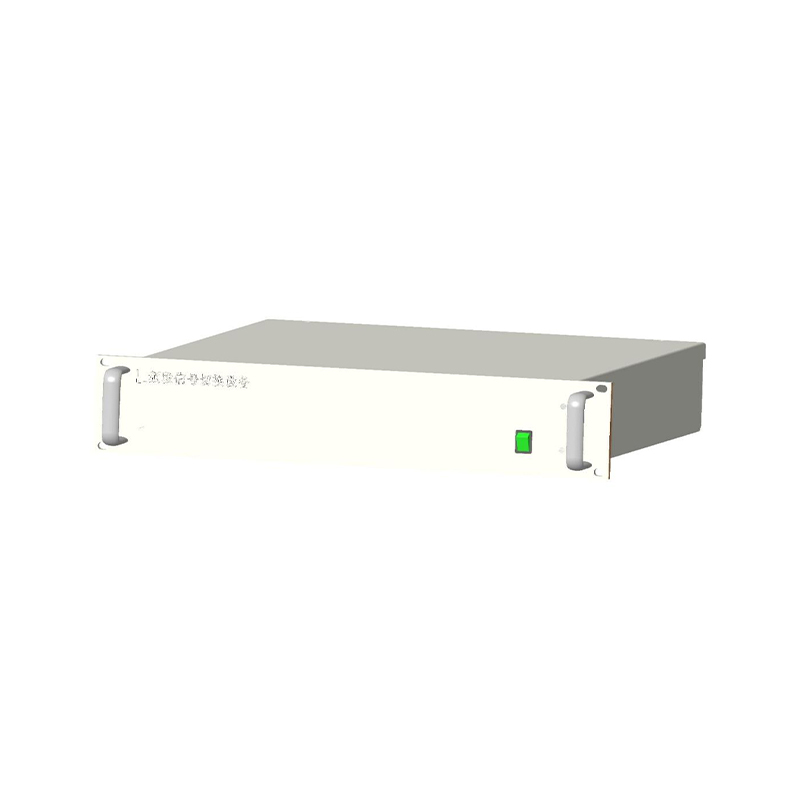
In modern satellite communication systems, ground stations, as the core nodes for signal reception, processing, and distribution, experience increasing system complexity with the parallel development of multiple constellations, frequency bands, and services. L-band signal switching devices play a crucial role in signal scheduling and management, especially in high-density signal environments, requiring the simultaneous handling of power allocation and switching between digital intermediate frequency (IF) signals and digital-analog signals to ensure the stable and efficient operation of communication links.1. Unified Scheduling Architecture for Digital IF and Analog SignalsIn complex satellite ground station systems, L-band signal switching devices first need to possess the capability for compatible and unified management of different signal types. By constructing a unified scheduling architecture for digital IF and analog signals, the device can achieve signal classification, processing, and dynamic allocation on the same platform. For example, digital IF signals can be precisely scheduled through digital processing modules, while analog signals can be quickly switched through analog channels. This hierarchical management approach helps improve the overall system processing efficiency and reduces the risk of signal conflicts.2. Power Allocation Mechanism Optimizes Signal Resource UtilizationIn high-density signal environments, different signal sources have varying power requirements. L-band signal switching devices, through a built-in power allocation mechanism, can dynamically adjust signal power based on service priority and link quality. For example, in critical communication tasks, priority is given to ensuring power output on the main signal link, while power is allocated reasonably among auxiliary links, thus achieving optimal resource configuration. This dynamic power management capability enables the system to maintain stable operation in complex communication environments.
3. Remote and Local Dual-Mode Operation Enhances Scheduling FlexibilityL-band signal switching devices typically possess both remote and local operation modes. In practical applications, remote operation allows for centralized control through a network management system, enabling ground stations to uniformly schedule multiple signal channels; while local operation is used for rapid manual intervention in emergencies. This dual-mode design not only enhances system flexibility but also strengthens emergency response capabilities in sudden situations, making signal scheduling more reliable.4. Visual Interface Management Improves System ControllabilityIn high-density signal management, complex interface connections can easily increase operational difficulty. L-band signal switching devices (LSS) enable operators to intuitively understand the connection status between signal channels by highlighting the signal connections between interfaces. For example, displaying signal paths and switching status through a graphical interface effectively reduces the risk of misoperation and improves the system's visual management level. This design significantly enhances operational efficiency and system controllability.5. Dynamic Scheduling Mechanism Ensures Efficient Communication OperationIn the context of multiple tasks operating in parallel at satellite ground stations, signal switching requirements are highly dynamic. L-band signal switching devices achieve automated signal switching and allocation by monitoring signal status in real time and combining it with preset scheduling strategies. When a signal experiences quality degradation or excessive load, the system can quickly adjust the signal path to ensure uninterrupted communication links, thereby improving overall system stability.Therefore, in complex satellite ground station systems, L-band signal switching devices, through the coordinated use of multiple technologies such as unified management of digital intermediate frequency and analog signals, dynamic power allocation, remote and local dual-mode control, and visual interface management, achieve efficient scheduling and stable operation of high-density signals, providing crucial support capabilities for modern satellite communication systems.