How does the RF link health management subsystem achieve real-time perception of the entire link's signal status through hardware collaboration?
Publish Time: 2025-12-26
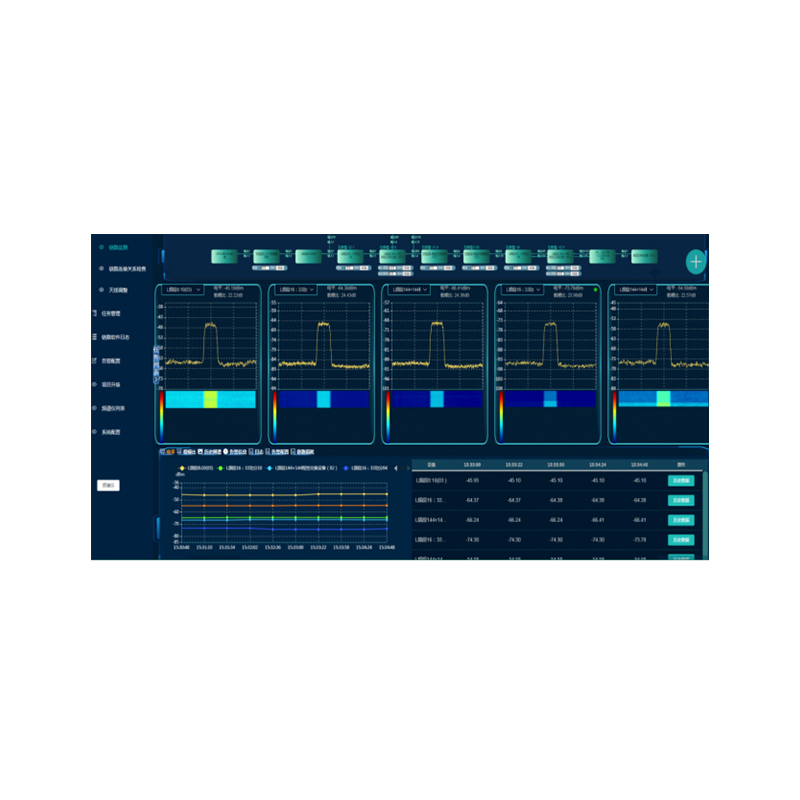
In modern high-reliability RF systems such as communications, radar, electronic warfare, and satellite ground stations, the stability of the RF link directly affects the success or failure of the mission. Traditional maintenance models relying on manual inspections or post-event alarms are no longer sufficient to meet the demands for "early detection, accurate location, and rapid response" in complex electromagnetic environments. The RF link health management subsystem was developed to address this need. This system, through deep collaboration of hardware units such as signal sources, signal selection devices, coupling devices, and spectrum analyzers, combined with an intelligent software platform, builds a real-time health monitoring capability covering the entire chain of "perception—acquisition—analysis—decision," truly achieving "visible, accurate, and rapid repair" of the RF link status.1. Multi-node signal coupling: Building the "nerve endings" of the entire linkRF links typically consist of multiple active/passive devices connected in series, such as antennas, filters, amplifiers, mixers, and switch matrices. Performance degradation at any node can trigger system-level failures. The core of the health management subsystem lies in deploying high-precision directional couplers or probe-type coupling devices at key nodes of the link, acting like "nerve endings" to continuously extract forward/reverse signal samples.These coupling devices possess low insertion loss, high directivity, and wide bandwidth characteristics, enabling them to undistortedly extract weak monitoring signals to the measurement channel without affecting the normal operation of the main link. Whether it's power fluctuations in the transmit link, noise increases in the receive link, or abnormal VSWR caused by loose connectors, all can be accurately captured, providing the raw data foundation for subsequent analysis.2. Intelligent Signal Scheduling and High-Speed Measurement: Achieving Minute-Level Full-Link ScanningFaced with complex multi-channel, multi-frequency systems, how can full-link traversal monitoring be efficiently completed? The system achieves automated testing processes through the coordinated control of signal selection devices, high-performance signal sources, and spectrum analyzers.During operation, the system software first issues the test task, and the signal source outputs a standard excitation signal injected into the link start point; subsequently, the signal selection device switches sequentially to each monitoring point according to a preset timing sequence, guiding the coupled signal into the spectrum analyzer. High-end spectrum analyzers possess the capability for rapid scanning, peak detection, channel power, ACLR, and other multi-dimensional parameter simultaneous measurement, with single-point measurement time reduced to within seconds. Thanks to this hardware-integrated mechanism, a comprehensive health assessment of the entire RF link can be completed within one minute, far exceeding the efficiency of manual testing.3. Hardware-Software Integrated Analysis Engine: Intelligent Leap from Data to Decision-MakingThe collected raw spectrum, power, and VSWR data are centrally processed through a B/S architecture system software platform. This platform adopts a modular design, supporting remote access, hierarchical access control, and cloud-based upgrades, significantly reducing the operational and maintenance threshold.The system has a built-in link health assessment model that automatically compares measured values with historical baselines or theoretical thresholds:If an amplifier gain drops by 3dB, the system marks it as "performance degradation";If abnormal spurious emissions appear in a frequency band, combined with location information, it is determined to be "mixer nonlinear distortion";If reverse power suddenly increases, a warning is issued for "antenna port open circuit or short circuit".Furthermore, through a fault knowledge base and expert rule engine, the system can not only automatically locate faulty nodes but also generate a visual topology map, intuitively displaying the health status of each link segment with color coding, and pushing targeted maintenance suggestions—such as "clean the TX OUT interface" and "replace the LNA module"—significantly shortening troubleshooting time.4. Real-time Status Monitoring and Predictive Maintenance: From Passive Response to Proactive DefenseIn addition to periodic scanning, the system supports 24/7 continuous status monitoring. For critical nodes, threshold alarms can be configured; once power drops or VSWR exceeds limits, an audible and visual alarm is immediately triggered, and a message is pushed to the maintenance personnel's mobile app.Simultaneously, the system's long-term accumulated operational data can be used to build trend analysis models. For example, if the insertion loss of a filter shows a slow upward trend, although not exceeding limits, the system can predict that it will fail in 30 days, allowing for advance replacement of spare parts, achieving predictive maintenance and avoiding significant losses caused by sudden downtime.5. Application Value: Enhancing Equipment Availability and Intelligent Operation and MaintenanceIn actual deployments, this subsystem has been widely applied in scenarios such as 5G base stations, military communication vehicles, and satellite telemetry and control stations. After its introduction at a radar station, the average fault location time was reduced from 4 hours to 8 minutes, and annual maintenance costs decreased by 35%. A 5G operator used it for health screening of Massive MIMO radio frequency units, effectively preventing early failures of a batch of components.The RF link health management subsystem is not simply a collection of instruments, but an organic whole built through precise hardware collaboration and intelligent software analysis. It transforms the originally "black box" RF link into a "transparent and perceptible" digital object, redefining the operation and maintenance paradigm of RF equipment with minute-level response, centimeter-level positioning, and expert-level diagnosis. In future intelligent and unmanned combat and communication systems, this type of system will become a core pillar ensuring that electromagnetic links are "always online and always reliable."