In the vast links of satellite communication, signals often attenuate to extremely weak nanowatt or even picowatt levels by the time they reach the ground after traversing the atmosphere from space tens of thousands of kilometers away. Power amplifier equipment plays a crucial role; it must amplify these weak signals submerged in background noise for subsequent circuit processing. However, the amplification process is highly susceptible to introducing additional electronic noise, leading to a deterioration in the signal-to-noise ratio and even the complete loss of useful signals. Therefore, maintaining extremely low noise figures and high linearity while achieving high gain has become the core challenge of "silent gain" in the field of radio frequency engineering. This is not a simple signal enhancement, but a precise game played on the edge of quantum noise limits.1. The Ultimate Pursuit of Noise Figure: Curbing Thermal Disturbances at the SourceTo amplify signals without introducing additional noise, the primary task is to reduce the amplifier's own "noise figure." According to Fries's formula, the total noise figure of a multi-stage amplification system is mainly determined by the first stage. Therefore, the preamplifier at the satellite receiver must employ a special low-noise design. Modern high-performance power amplifiers typically use compound semiconductor materials such as gallium arsenide, indium phosphide, or gallium nitride. These materials have extremely high electron mobility, enabling high gain at low voltages, thereby reducing thermal noise generated by current flow. In topology design, engineers employ "noise matching" rather than the traditional "power matching" strategy. Through a carefully designed input matching network, the source impedance of the transistors is adjusted to their optimal noise impedance point, minimizing internal thermal disturbances generated by the amplifier when absorbing signals. This design ensures that the amplifier can amplify weak signals thousands of times while generating negligible additional noise, perfectly preserving the original signal-to-noise ratio, as if the signal simply "flows" through the amplifier without any contamination.
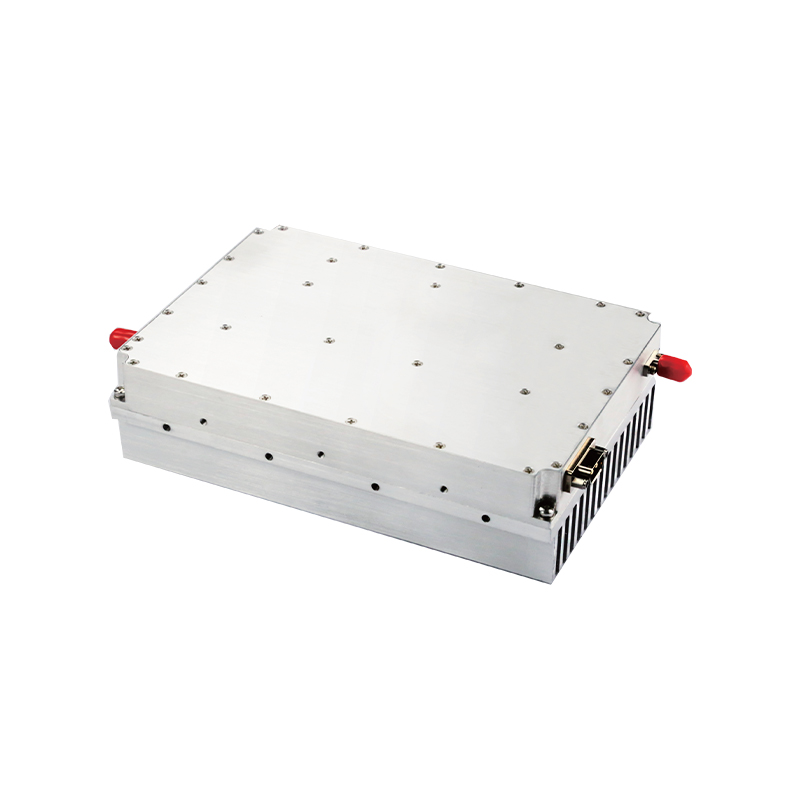


2. Maintaining Linearity: The Art of Combating Nonlinear DistortionBesides low noise, high linearity is another key indicator. Satellite communication signals often use high-order modulation methods, requiring extremely high amplitude and phase accuracy. If the amplifier enters the nonlinear region, harmonic distortion and intermodulation distortion will occur. These distortion products will fall into adjacent channels, creating interference and severely compromising signal integrity.To achieve high linearity, power amplifier equipment typically operates in deep Class A mode or employs advanced linearization techniques. In Class A mode, the transistors are always on, avoiding nonlinear distortion caused by switching and ensuring a high degree of consistency between the output and input waveforms. However, Class A efficiency is relatively low, so modern equipment tends to incorporate digital predistortion (DPD) technology. DPD injects a distortion signal at the input that is opposite to the amplifier's nonlinear characteristics; the two cancel each other out internally, resulting in a perfectly linear signal at the output. This "fight fire with fire" strategy allows the amplifier to maintain extremely high linearity even near saturation power output, ensuring that the details of weak signals are not distorted.3. Thermal Management and Stability: Dynamic Balance in Static EnvironmentsThe amplification of weak signals is extremely sensitive to temperature. Temperature fluctuations can change the transistor bias point, leading to gain drift and noise figure degradation. In satellite ground stations or onboard equipment, power amplifier equipment is equipped with sophisticated temperature control systems. By monitoring chip temperature in real time and dynamically adjusting the bias current, the system can lock the core components at their optimal operating temperature, eliminating the risk of thermal noise increasing with temperature.Furthermore, to further suppress potential unstable oscillations, stringent electromagnetic shielding and filtering measures are incorporated into the circuit design. The input and output filters not only eliminate out-of-band interference but also prevent broadband noise generated by high-frequency self-oscillation from contaminating the signal band. This comprehensive stability design ensures that the amplifier, even when faced with extremely weak signals, acts as a calm guardian, providing only pure gain without introducing any noise.In summary, the power amplifier equipment at the satellite communication receiver, through the selection of low-noise materials, the implementation of noise matching networks, the application of digital predistortion linearization technology, and precise thermal management control, successfully achieves high-fidelity signal enhancement in extremely low signal-to-noise ratio environments. Without introducing additional noise, it clearly amplifies faint calls from deep space, constructing a stable and reliable information bridge between space and Earth, demonstrating the superior performance of radio frequency technology under extreme conditions.