News

How do passive microwave devices like waveguide phase shifters achieve high-precision phase control without introducing active components?

Publish Time: 2026-02-06
In modern microwave and millimeter-wave systems, especially in high-end applications such as phased array radar, satellite communications, and 5G/6G base stations, precise control of signal phase is crucial. As a fundamental passive component in waveguide transmission systems, the core function of a waveguide phase shifter is to precisely adjust the phase of electromagnetic waves without altering the signal amplitude. Crucially, these phase shifters rely entirely on physical structures rather than active devices like transistors or diodes for control, yet still achieve extremely high phase accuracy and stability.

1. Phase Control Principle Based on Physical Path Length Variation

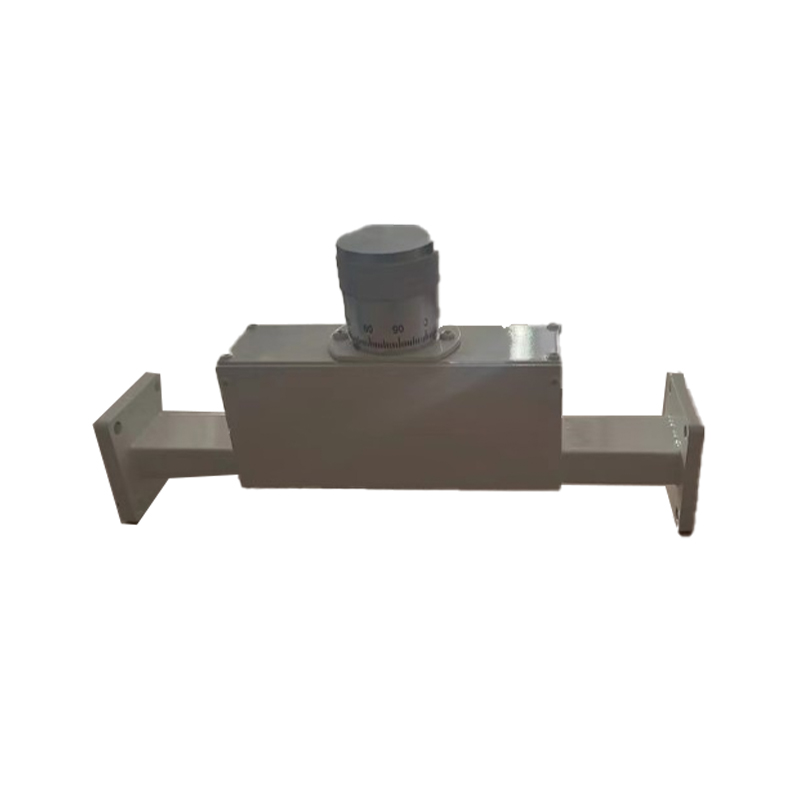
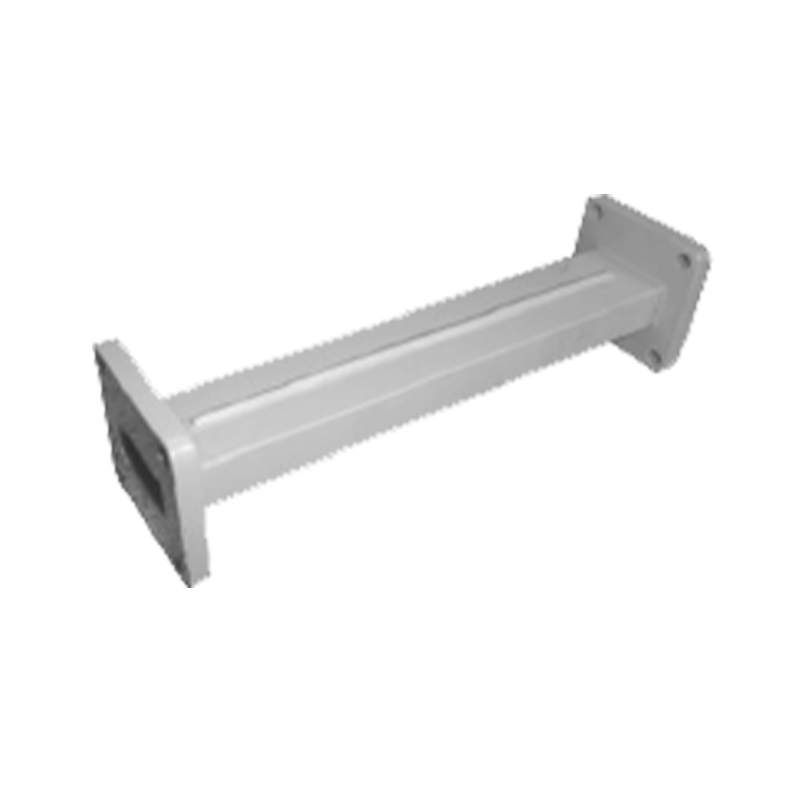
When an electromagnetic wave propagates in a waveguide, its phase is proportional to the propagation path length. Waveguide phase shifters utilize this fundamental principle, changing the effective electrical length of the signal through mechanical or structural means to achieve phase shifting. Typical implementations include: movable metal diaphragms, sliding short-circuit pistons, rotating stepped impedance sections, or tunable screw arrays. For example, in reflective phase shifters, the round-trip path between the incident and reflected waves is altered by adjusting the position of the short-circuit path, resulting in a controllable phase shift. In transmission-type designs, discrete or continuous phase changes are achieved by inserting delay segments of different lengths or switching multi-path channels. Since these controls are based entirely on precise geometric changes and require no external power supply or semiconductor devices, they inherently possess high power tolerance and long-term stability.


2. Precision Mechanical Structure Ensures High Phase Resolution

The "high precision" of passive waveguide phase shifters primarily relies on ultra-precision machining and assembly techniques. Modern high-performance phase shifters often employ guide rails, lead screws, or piezoelectric drive mechanisms with micron-level tolerances, coupled with highly repeatable positioning systems, enabling phase steps of 0.1° or even smaller. For example, in X-band systems, a 1° phase error corresponds to a path length deviation of approximately 0.28 mm, placing extremely high demands on structural rigidity, thermal expansion coefficient matching, and motion smoothness. Furthermore, to reduce contact resistance and micro-discharge effects, key sliding interfaces are often gold-plated or made of low-friction composite materials to ensure phase consistency after hundreds of thousands of cycles. This design philosophy of "trading mechanical precision for electrical performance" is the key reason why passive phase shifters are irreplaceable in high-reliability scenarios.

3. Optimizing Electromagnetic Structure to Suppress Parasitic Effects and Improve Linearity and Bandwidth

High precision refers not only to accurate phase shift, but also to the linear relationship between phase shift and control quantity, as well as stability within the frequency band. To this end, engineers optimize the internal structure of the waveguide through electromagnetic simulation: for example, by using a gradual transition section to reduce mode conversion, using symmetrical loading to reduce reflection, or introducing a compensation cavity to counteract dispersion effects. Some high-end phase shifters also employ multi-segment cascaded or hybrid tuning mechanisms to maintain phase flatness while widening the operating bandwidth. Because there are no active nonlinear components throughout, its intermodulation distortion is extremely low, making it particularly suitable for high dynamic range radar receiving channels or linear frequency modulation systems.


Microwave passive waveguide phase shifters, through purely physical mechanisms, precision mechanical implementation, and optimized electromagnetic design, achieve excellent phase modulation accuracy, high power capacity, and long-term environmental stability without any active components. Although its size and response speed are not comparable to solid-state phase shifters, it remains an irreplaceable core component in fields with stringent requirements for reliability and performance limits, such as aerospace, defense, and high-energy physics.
×

Contact Us

captcha